
Bitcoin Slips to 64,961 as Legislative Uncertainty, Macro Headwinds Weigh
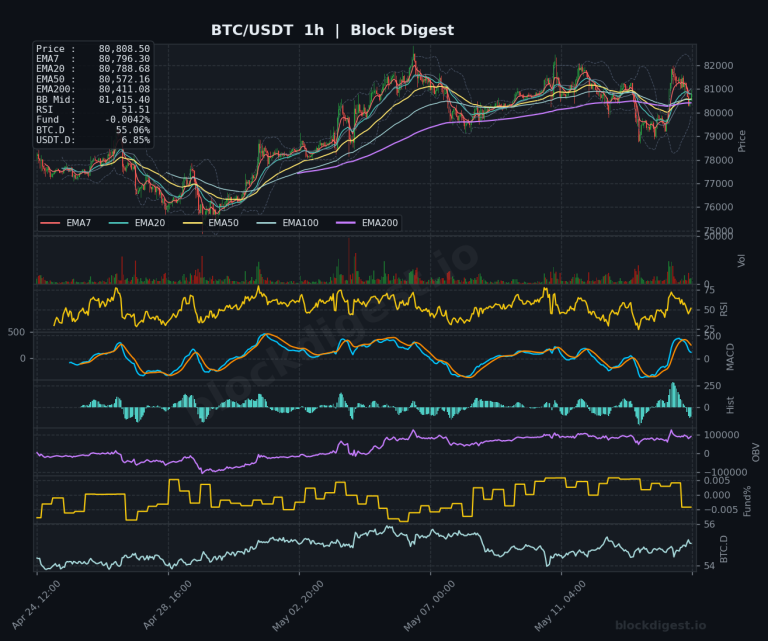
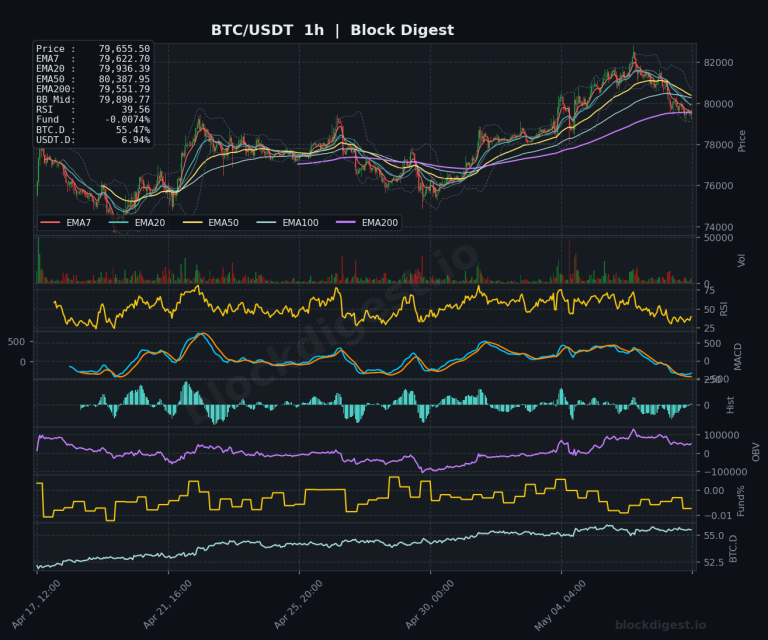
The crypto market shed 1.3% overnight to settle at 2.3 trillion dollars as legislative headwinds and macroeconomic pressures weighed on investor sentiment, with Bitcoin slipping to 64,961.68 and the Fear & Greed Index plunging to 28. Despite the broad weakness, Block Digest’s proprietary BD Pulse indicator registered a bullish 63/100 score, suggesting underlying structural support even as traders navigate near-term consolidation and delayed regulatory clarity on key policy measures.
Background: A Market Caught Between Recovery and Uncertainty
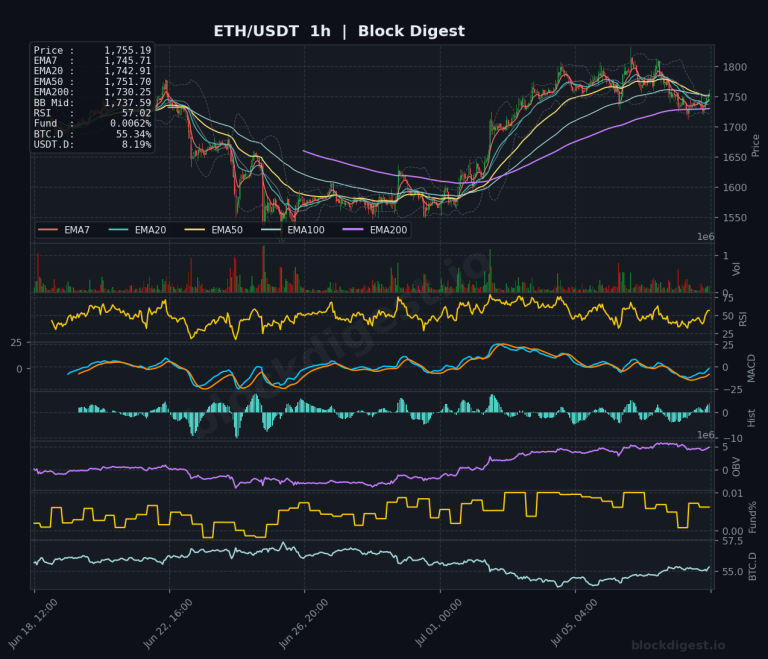
Bitcoin and Ethereum both retreated on July 24 following a mixed session on July 23, when BTC fell 1.70 percent to 65,047.34 and ETH dropped 3.09 percent to 1,883.70. The declines arrive as the cryptocurrency sector grapples with a confluence of macro headwinds that have dampened the optimism that carried digital assets through much of July. After rallying more than 13 percent from its July 1 low of 57,750, Bitcoin has now held a narrow consolidation band between 64,000 and 66,800 for three consecutive sessions, signaling a market that has exhausted its near-term momentum and is waiting for fresh catalysts to determine its next directional move.
The primary weight on sentiment stems from two distinct but reinforcing pressures. First, rising Treasury yields and elevated oil prices have created a headwind for risk assets broadly, including cryptocurrencies. Second, and more specific to crypto, uncertainty surrounding the passage of the CLARITY Act—legislation that has been positioned as a cornerstone of regulatory clarity for digital assets—has increased as key legislative windows have narrowed. Analysts tracking Capitol Hill developments suggest the measure faces a steeper hill to passage than previously assumed, removing what had been a tentative tailwind for price action.
The Numbers: Bitcoin Holds Ground Despite Intraday Weakness
Bitcoin’s decline to 64,961.68 represents a 1.4 percent drop over the last 24 hours, with 23.7 billion dollars in trading volume underpinning the move. Ethereum, while specific July 24 pricing was not separately detailed in overnight data, joined the broader retreat as the market cap contraction spread across major assets. Ethereum’s dominance sits at 9.82 percent, while Bitcoin maintains commanding control at 56.6 percent of total market value—a metric that has remained stable even as the overall crypto market cap fluctuated.
Trading volume across all cryptocurrencies reached 58.9 billion dollars on the day, consistent with patterns seen in consolidation phases where reduced conviction among traders translates to lighter participation. The Fear & Greed Index’s drop to 28 underscores a shift toward caution rather than panic, a distinction that matters for market structure. An index reading in the 20-40 range typically reflects selective selling and a wait-and-see posture rather than capitulation—a meaningful difference for identifying potential support levels.
Block Digest’s proprietary BD Extreme Index registered at plus 1.32 sigma, flagging overbought conditions on a localized basis, yet the BD Pulse Score of 63 out of 100 maintained a bullish lean. The long-to-short account ratio stood at 1.51, with 60.1 percent of tracked traders positioned long against 39.9 percent short, indicating that despite price weakness, leverage traders have not yet capitulated en masse. This imbalance can either presage continued weakness or provide a cushion should prices find support.
Divergence in the Market: DeFi’s Strength Amid Broad Malaise
While legacy crypto assets stumbled, decentralized finance posted a remarkable 9.8 percent surge on July 24, an outperformance that hints at rotations within the sector rather than a wholesale exodus of capital. The DeFi strength—driven in part by activity in lending protocols and automated market makers—suggests that portions of the crypto economy are functioning independently of macro sentiment, at least for the moment.
This divergence matters because it challenges the narrative of uniform weakness. When a major subsector like DeFi posts gains of this magnitude amid a declining aggregate market, it points to differentiation in investor behavior: some market participants are moving capital into perceived value rather than fleeing to fiat entirely. Whether this represents a genuine reallocation or merely a short-term tactical trade remains to be seen over the next few trading sessions.
What Analysts Are Saying: Conflicting Signals on Year-End Targets
Analyst sentiment remains fractured on the path forward. Grayscale’s Zach Pandl has argued that if the Federal Reserve forgoes further rate hikes and economic growth remains resilient, Bitcoin may have already bottomed near its recent lows. Standard Chartered renewed its bullish year-end 2026 price target of 100,000 dollars for Bitcoin, a position that assumes a significant recovery from current levels. Conversely, Polymarket odds suggest a more measured outcome, with the plurality of traders betting Bitcoin closes 2026 between 70,000 and 75,000 dollars—a range that implies further modest upside from current prices but well below the Standard Chartered thesis.
Coinbase CEO Brian Armstrong offered retrospective commentary in June that Bitcoin found its low point near 60,000, positioning current levels as recovery territory. These overlapping but non-identical forecasts reflect genuine uncertainty about whether macro conditions will improve enough to reignite the risk-on sentiment that drove the July rally.
What This Means for the Market
The overnight decline and subsequent consolidation represent a market searching for direction rather than one in free fall. Bitcoin’s ability to maintain its foothold above 64,000, combined with the resilience in funding rates and the non-capitulation evident in long-to-short ratios, suggests that downside risk may be bounded for now. However, the legislative uncertainty and macro headwinds are real brakes on momentum, and without a fresh catalyst—whether a shift in Fed policy signals, CLARITY Act progress, or broader equity market stabilization—price action is likely to remain range-bound in the 64,000 to 67,000 band for the near term.
Resolution of CLARITY Act uncertainty in the coming weeks could serve as a key inflection point; similarly, economic data that reduces rate-hike expectations would likely unlock fresh upside momentum.
—
Disclaimer: This content is for informational purposes only and does not constitute financial advice. Cryptocurrency markets are highly volatile and unpredictable. All trading decisions should be made based on your own research and risk tolerance. Block Digest is not responsible for any financial losses incurred as a result of acting on this content.