Crypto Roundup: Market Reels as Macro Headwinds Collide with Protocol Failures
Rate Hike Fears Trigger Asset Selloff
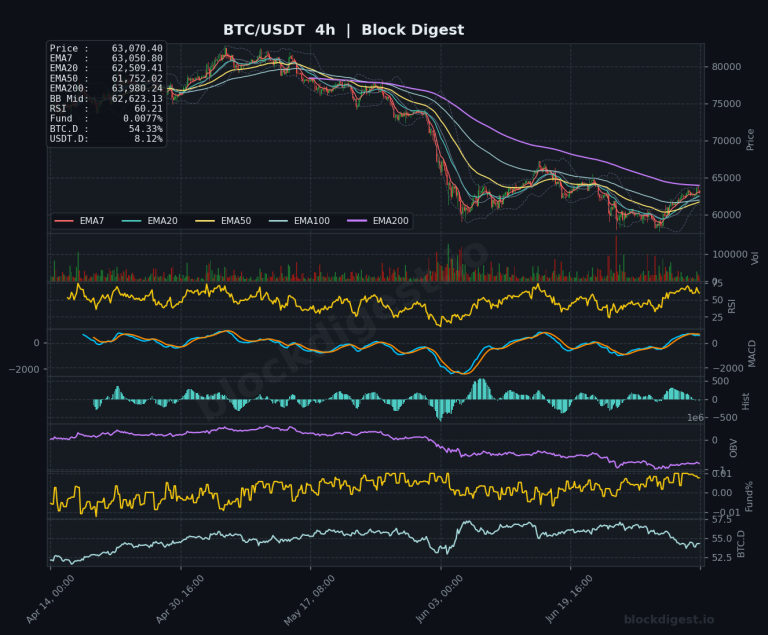
Cryptocurrency markets faced renewed selling pressure this week as stronger-than-expected U.S. employment data raised the prospect of Federal Reserve rate increases, reversing months of declining interest rate expectations. Bitcoin tumbled below $62,000, marking its weakest level since October 2024, as institutional investors began rotating out of digital assets and toward traditional equity derivatives. The convergence of macroeconomic headwinds with shifting buyer sentiment proved devastating for price stability, with Bitcoin’s largest institutional buyer increasingly taking a seller’s stance across major spot and derivatives venues.
Institutional trading patterns showed subtle shifts amid the turmoil. Bitcoin exchange-traded fund inflows resumed after a 13-day drought, attracting $3 million in fresh capital, while Ethereum ETFs similarly ended a 17-day outflow streak as traders repositioned ahead of the jobs report. However, analysts cautioned that these modest inflows reflected tactical rebalancing rather than genuine conviction, with many sophisticated investors rotating into equity perpetual futures contracts to hedge against broader market volatility.
Zcash Meltdown Exposes Deep Protocol Vulnerabilities
The privacy-focused Zcash network experienced a catastrophic collapse after researchers discovered a critical counterfeiting bug that had remained undetected for four years. The token plummeted 40% on news that the vulnerability had already been silently patched, raising serious questions about the protocol’s supply integrity and development transparency. Bearish sentiment reached record levels with short positions hitting all-time highs, as traders abandoned the asset amid broader concerns about whether the discovered flaw represented an isolated incident or symptom of deeper architectural problems.
Zcash developers scrambled to address community concerns, announcing plans for a new shielded pool and enhanced accounting mechanisms to verify the coin’s total supply. Despite reassurances from the project’s treasury company, Cypherpunk Technologies, that it remained committed to accumulating 5% of the circulating supply, market confidence remained severely damaged. The incident highlighted the risks inherent in privacy-focused blockchain systems where critical vulnerabilities could theoretically remain hidden indefinitely from external auditors.
Regulatory Momentum Builds Across Multiple Fronts
Legislative activity intensified across Washington as lawmakers prepared several competing cryptocurrency proposals for consideration. The House Ways and Means Committee circulated seven draft bills addressing everything from taxation of small transactions to comprehensive stablecoin regulation, signaling movement toward establishing formal regulatory frameworks. Meanwhile, bipartisan crypto legislation including the Clarity Act drew closer to a Senate vote, though concerns about ethics rules and illicit finance safeguards continued to delay final passage.
International regulators also intensified scrutiny of emerging crypto trading mechanisms. CME CEO Terry Duffy warned that U.S.-approved perpetual futures contracts risked creating conditions for retail investor blowouts and dangerous leverage accumulation, echoing concerns from the UK’s Financial Conduct Authority which issued warnings against platforms like Hyperliquid. South Korean authorities launched the country’s first investigation into potential illegal gambling through the Polymarket prediction platform, while U.S. House Republicans planned a summer vote on restricting lawmakers’ participation in prediction markets.
Institutional Adoption and Tokenization Accelerate
Despite market volatility, institutional development continued advancing across multiple fronts. JPMorgan and Citigroup are reportedly planning a tokenized deposit network launching in early 2027, while Visa tested private stablecoin settlement protocols with institutional partners on the Canton blockchain. These initiatives suggest that major financial institutions view the downturn as an opportunity to accelerate infrastructure development rather than retreat from digital asset experimentation.
Separately, the tokenization specialist Securitize—backed by BlackRock and powering the BUIDL fund—cleared a critical regulatory hurdle toward NYSE listing, with SEC approval of its merger registration. Morgan Stanley expanded its crypto services by partnering with Galaxy Digital to allow eligible wealth management clients to lend digital assets in exchange for cryptocurrency ETF shares, demonstrating how traditional finance continues embedding crypto infrastructure into mainstream investment workflows. A new industry coalition also emerged focused on crypto vaults, the increasingly popular mechanism for asset custody and yield generation.
Price Action and Technical Levels
Market technicians identified significant support levels ahead as Bitcoin approached psychological thresholds. Analysts suggested that if the $60,000 level fails to hold, deeper corrections toward $50,000 remain possible, with extreme bearish scenarios pointing to potential downside toward $33,000 under a worst-case weekly setup. Some observers noted tentative signs of seller exhaustion emerging near current levels, particularly as whale accumulation resumed, though the return of the Coinbase and Kimchi premium spreads remained essential to spark a meaningful rebound.
Altcoin weakness persisted beyond Zcash’s implosion. XRP collapsed toward $1.10 after high-volume breakdown overwhelmed support near $1.20, while memecoins Dogecoin and Shiba Inu both surrendered 9% through the session on heavy liquidation flows. The CoinDesk 20 index, comprising the twenty largest cryptocurrency assets, fell 2.8% with all constituents trading lower, underscoring the broad-based nature of current selling pressure.
What to Watch
Markets will likely remain sensitive to Federal Reserve communications regarding interest rate trajectories, with any softening of rate hike expectations potentially triggering relief rallies. Regulatory developments from congressional hearings on crypto taxation and stablecoin frameworks could substantially impact institutional deployment timelines. Additionally, developments surrounding Zcash’s remediation efforts and broader trust in privacy protocols will merit close observation, as successful confidence restoration could signal whether the protocol maintains viability for institutional adoption.
Sources: CoinDesk, CoinTelegraph, The Block, Decrypt
Disclaimer: This content is for informational purposes only and does not constitute financial advice. Always conduct your own research before making investment decisions.