Crypto Roundup: Institutional Adoption Clash With Market Volatility
Institutional Capital Drives Strategic Positioning
Crypto’s push toward mainstream acceptance continues to gather momentum despite ongoing regulatory uncertainty. Paxos has begun supporting Dogecoin across its fintech and institutional platforms, opening new pathways for traditional financial firms to evaluate and offer DOGE to their clients. This integration represents a meaningful step toward bridging the gap between crypto-native assets and conventional finance infrastructure. Separately, Robinhood has completed its acquisition of Canadian cryptocurrency platform WonderFi for $180 million, signaling aggressive expansion into North American markets. The acquisition consolidates Bitbuy and Coinsquare users onto Robinhood’s platform, demonstrating how established fintech players continue consolidating fragmented crypto infrastructure.
Ethereum and Bitcoin Show Divergent Strength
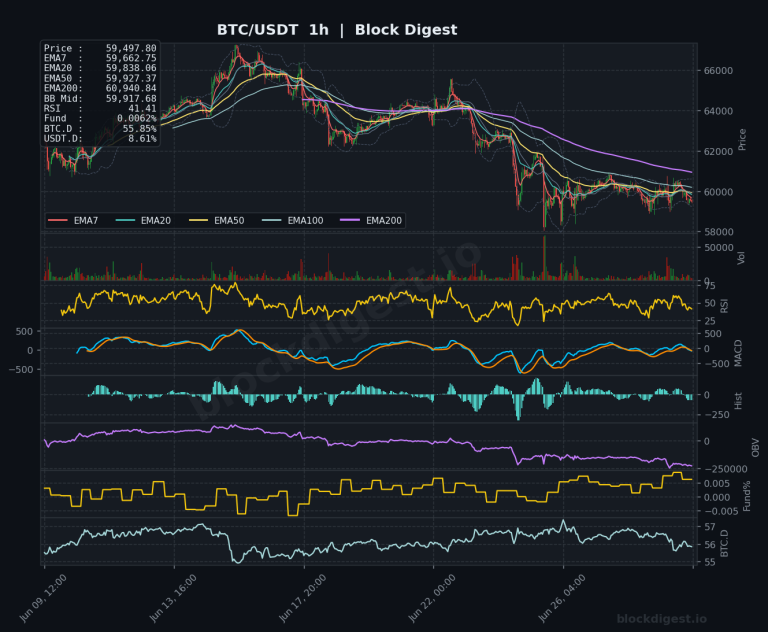
Ethereum has attracted significant institutional interest from an unexpected quarter. Bitmine announced a $52 million Ethereum purchase as part of its strategy to accumulate 5% of total ETH circulating supply, claiming it is now approximately 90% toward its goal. Market analysts, including prominent strategist Tom Lee, argue that Ethereum’s price action underestimates the network’s underlying strength and future potential. Bitcoin, meanwhile, has faced downward pressure and recently dropped below $71,000 during the week’s open, prompting early bullish derivative positioning as traders position for potential rebounds. Despite current weakness, derivatives data suggests market participants view recent dips as buying opportunities rather than signals of broader weakness.
Market Sentiment Fractured by Single Event
A substantial Bitcoin sale by Strategy has exposed fragmentation in the crypto trading community and raised broader questions about market transparency. The transaction sparked over $80 million in Polymarket derivatives bets as participants wagered on timing and disclosure implications. While analysts noted the sale’s absolute size was relatively modest in historical context, its signaling effect triggered bearish sentiment across the broader market. The incident underscores how concentrated holdings and large liquidations can create outsized psychological impacts on asset prices, even when fundamental factors might suggest their irrelevance.
Regulatory Framework Remains Contentious
Progress on US crypto regulation continues to stall amid ideological divisions. The CLARITY Act debate resumed as the Senate returned this week, with Democratic lawmakers signaling resistance to any market structure legislation lacking provisions addressing political ethics concerns. The debate reflects persistent partisan gridlock around crypto regulation, where philosophical disagreements about market structure and oversight mechanisms prevent consensus on baseline frameworks. These regulatory uncertainties add friction to institutional onboarding efforts and create unpredictability for platforms navigating compliance across jurisdictions.
DeFi Recovery Remains Elusive
Radiant’s shutdown following its inability to recover from a 2024 security breach highlights the brutal reality of DeFi protocol economics. Although the protocol announced that smart contracts and frontend infrastructure would remain accessible for users to manage positions and withdraw funds, the operational wind-down reflects how unresolved security incidents can erode user confidence irreversibly. The consolidation of DeFi failures and the survival bias toward platforms with sufficient capital reserves to weather crises suggests the sector continues maturing through painful market selection.
What to Watch
Investors should monitor whether Bitcoin stabilizes above $70,000 as institutional accumulation signals compete with macroeconomic headwinds. The CLARITY Act debate will shape whether institutional adoption can accelerate amid regulatory clarity or faces continued uncertainty. Ethereum’s narrative shift from undervalued to institutional-grade asset requires monitoring significant on-chain metrics and derivative flows.
Sources: CoinTelegraph, The Block, Decrypt
Disclaimer: This content is for informational purposes only and does not constitute financial advice. Always conduct your own research before making investment decisions.