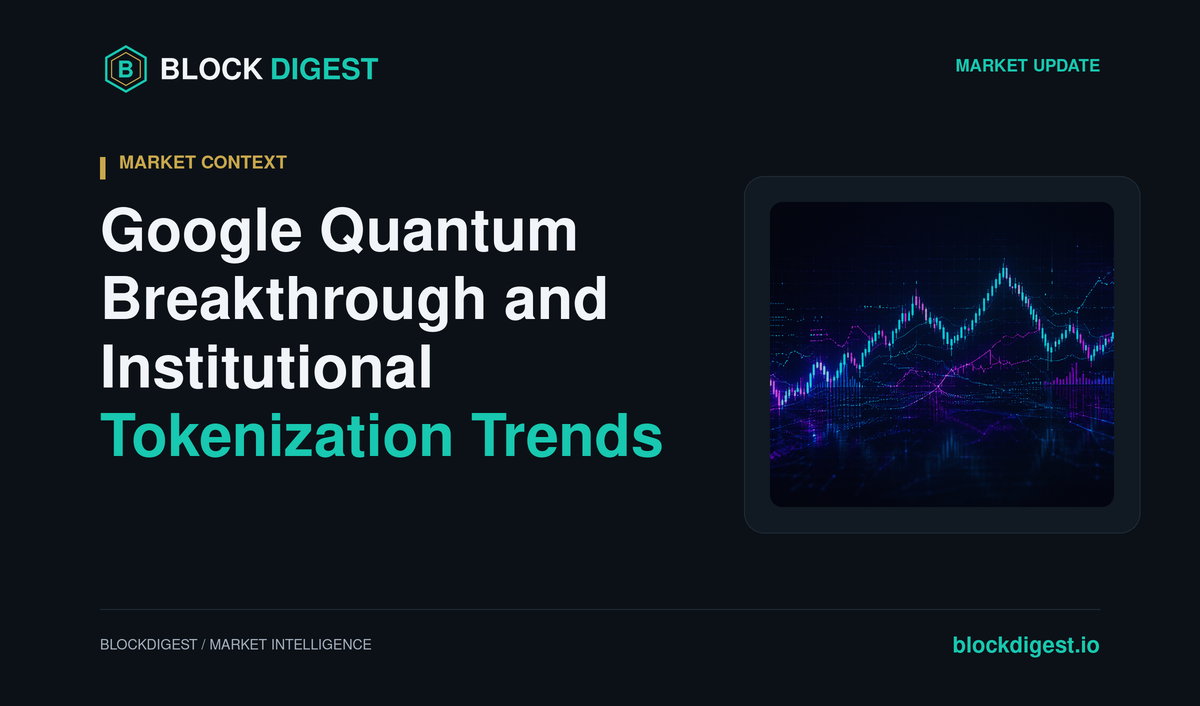
The current market landscape reflects a tension between long-term existential threats to digital security and the rapid institutional adoption of blockchain infrastructure. While Wall Street firms lean into tokenization as a core growth pillar, the broader crypto market remains cautious, reflecting a bearish sentiment as traders weigh the implications of quantum computing breakthroughs against persistent security risks.
Google Quantum Milestone Puts Q-Day on the Radar
Google researchers have successfully demonstrated magic state cultivation, a technical leap that addresses the primary bottleneck for scaling quantum computers. By pairing this technique with the new Willow chip, the team achieved a measurable reduction in error rates. This development has reignited industry-wide anxiety surrounding Q-day, the hypothetical moment when quantum hardware becomes sophisticated enough to break the cryptographic standards currently protecting Bitcoin wallets. Industry-led alliances are already forming to develop quantum-resistant protocols for the blockchain ecosystem.
The market is feeling the weight of these long-term uncertainties. As of October 17, 2026, the BD Pulse sits at 38.3/100, signaling a bearish environment. With the BD Extreme Index currently at -0.74σ versus the prior 365 days, participants are sensitive to macro-level risks that could impact the fundamental security of digital assets. While Q-day remains a future concern rather than an immediate liquidity event, the focus on quantum-resistant infrastructure is becoming a prerequisite for institutional participation.
Visa and Inyo Global Launch USDC Prefunding
Visa has moved its USDC prefunding capabilities into a live commercial production environment, marking a milestone for stablecoin integration into legacy payment rails. Inyo Global is the first commercial enabler to utilize this infrastructure, allowing for faster settlement processes by leveraging Circle’s dollar-pegged token. This rollout signals that stablecoins are now viewed as a scalable component of global payment architecture. The move aims to streamline cross-border transactions, reducing the friction that has historically plagued traditional settlement cycles.
Wall Street Banks Pivot to Tokenization
Major financial institutions including Goldman Sachs, Wells Fargo, and Morgan Stanley are treating tokenization as a strategic growth opportunity rather than a disruptive threat. These banks are integrating blockchain technology to streamline trading operations and accelerate settlement times. Beyond efficiency, these firms are building advisory services for clients interested in on-chain financial products. Traditional finance is aggressively seeking to capture revenue from the growing ecosystem of tokenized real-world assets, with institutional focus shifting toward identifying which protocols will serve as the backbone for this migration.
Polygon Targets Payments with Coinme Acquisition
Polygon is challenging payment giants like Visa and Stripe through its acquisition of Coinme. CEO Marc Boiron confirmed the move is designed to bring customer relationships under the network’s control, allowing Polygon to capture transaction revenue that has historically flowed to traditional intermediaries. By integrating Coinme’s existing infrastructure, the layer-2 network aims to offer a competitive, blockchain-native payment experience for merchants and consumers. This marks a strategic pivot for Polygon as it transitions from a pure infrastructure developer into a provider of consumer-facing financial services.
Scammer Falls Victim to Ledger Spy-Chip Exploit
A fraudster running a fake online job scheme lost nearly $5 million in Bitcoin after falling victim to the very hardware vulnerability they were attempting to exploit. According to Chainalysis, the attacker used a modified Ledger wallet equipped with a spy chip to facilitate their crimes, only to have that same hardware compromised by another bad actor. The incident highlights the risks associated with tampered hardware wallets, which have become a primary focus of security investigations. The irony underscores the high-stakes nature of modern hardware-based cyberattacks, where the line between predator and prey is increasingly blurred.
What to Watch Next
The intersection of institutional payment integration and long-term security threats will likely dictate the market’s tone through the end of the week. Watch for how major protocols respond to the quantum-resistant standards debate, as these technical shifts will influence how traditional banks allocate capital to on-chain assets.
Sources: The Block, The Block, CoinDesk, CoinDesk, CoinDesk
Disclaimer: This content is for informational purposes only and does not constitute financial advice. Cryptocurrency markets are highly volatile and unpredictable. All trading decisions should be made based on your own research and risk tolerance. Block Digest is not responsible for any financial losses incurred as a result of acting on this content.
Stay Ahead of the Market
Follow BlockDigest for crypto market intelligence, research and real-time updates.