
Crypto Roundup: Bitcoin’s Bear Test and the Race for Real-World Adoption
Market Pressure Tests Bitcoin’s Conviction
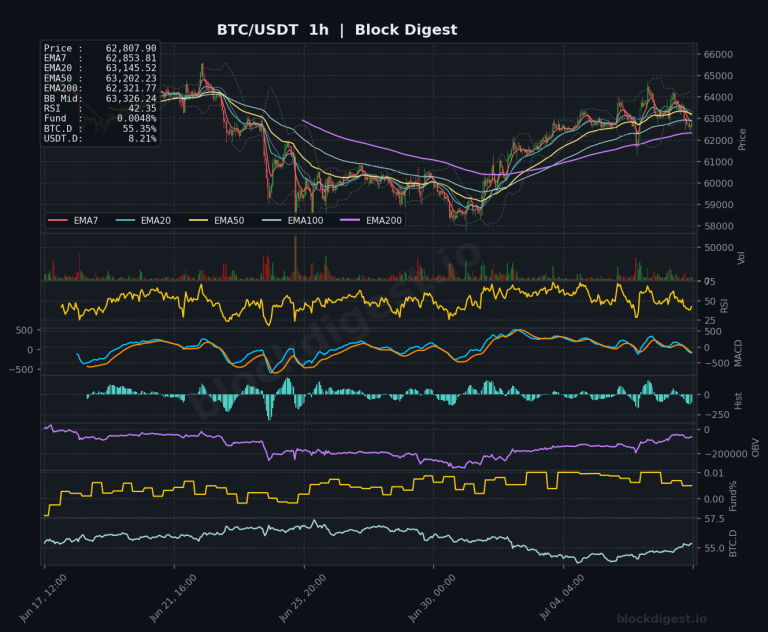
Bitcoin has experienced a significant pullback, sliding to $62,000 as institutional confidence wavers amid competing narratives about the cause. MicroStrategy’s Michael Saylor attributes the decline to capital flowing into artificial intelligence infrastructure rather than fundamental weakness in cryptocurrency itself, though bearish traders point to more systemic concerns. The sell-off has triggered technical damage, with Bitcoin revisiting the 200-week trend line that defined the 2022 bear market, while the relative strength index approaches its lowest reading in six years. The situation became more acute when Strategy faced over $11 billion in paper losses from its massive Bitcoin holdings, adding psychological pressure to an already fragile market sentiment.
Large institutional holders are intensifying the downturn through notable exits. Arthur Hayes, the prominent crypto entrepreneur, has liquidated positions across multiple tokens including HYPE and NEAR, citing warnings about market peaks before September and concerns about AI initial public offerings draining liquidity from crypto markets. FG Nexus, an Ethereum treasury firm, continues cutting exposure by offloading additional tranches of Ether, pushing realized and unrealized losses beyond $100 million. Meanwhile, spot Bitcoin exchange-traded funds have bled $4.4 billion over a 13-trading-day outflow streak, with Wednesday alone seeing $397 million exit the products as traditional investors reassess their holdings.
Contrarian Accumulation Amid Weakness
Not all market participants are capitulating to the downturn. DDC Enterprise has seized the decline as a buying opportunity, adding 90 Bitcoin to reach 2,804 BTC and joining the ranks of the top 30 corporate Bitcoin holders globally. The company’s strategy of deploying capital when markets offer discounts reflects a conviction that current pricing represents value rather than further downside risk. This divergence between panic sellers and opportunistic buyers suggests the crypto market is fracturing along conviction lines, with long-term believers using weakness to increase positions while shorter-term traders exit ahead of potential further declines.
Real-World Integration Accelerates
Despite near-term price weakness, cryptocurrency adoption into traditional financial infrastructure continues advancing. Coinbase and Better have funded the first Fannie Mae-backed mortgage using Bitcoin as collateral, with plans for nationwide expansion signaling growing acceptance of digital assets in mainstream lending. Visa and Brale have launched a proof of concept for privacy-enabled stablecoin settlement on the Canton Network, demonstrating how institutional financial services are exploring blockchain-based solutions. These developments underscore a parallel track where practical implementation proceeds independent of short-term price action, positioning crypto infrastructure for longer-term structural adoption.
Tokenization of real-world assets is generating particular institutional momentum, with Goldman Sachs’ tokenized real estate fund attracting participants like Apex Group and Archax. Industry observers have drawn comparisons between current tokenization dialogue and the early evolution of exchange-traded funds, which eventually transformed into a $10 trillion-plus market. The narrative around crypto’s future increasingly rests on asset class maturation rather than speculative appreciation, though debate continues about whether Bitcoin itself remains the largest potential beneficiary of this technological shift.
Ecosystem Rebalancing and Regulatory Path Forward
The Layer 2 ecosystem serving Ethereum continues experiencing natural selection, with many general-purpose chains losing relevance as the network consolidates around the most useful solutions. Meanwhile, regulatory progress remains uncertain, with JPMorgan analysts warning that the crypto market structure clarity act may have only a narrow legislative window for passage this year. Senate Republicans are simultaneously pressing financial regulators to clarify capital standards for digital assets, suggesting regulatory clarity remains a critical near-term variable for institutional adoption.
DeFi security has improved materially, with exploit losses falling 74 percent from 2022 peaks to $680 million in 2025 as artificial intelligence-driven security tools reshape the arms race against hackers. Retail infrastructure continues expanding beyond pure trading, with moomoo’s partnership with Kalshi bringing CFTC-regulated event contracts to mainstream investors and Travala introducing agentic AI protocols for commerce on blockchain networks.
What to Watch
As Bitcoin consolidates near historic technical support, the tug-of-war between institutional capitulation and strategic accumulation will likely define near-term price direction. Regulatory developments around the clarity act and digital asset capital standards could trigger significant portfolio reallocations, while continued real-world adoption announcements—particularly in mortgage lending and tokenized securities—may eventually override near-term sentiment swings. The divergence between price action and infrastructure progress suggests a market repricing expectations rather than experiencing systemic failure.
Sources: CoinDesk, CoinTelegraph, The Block, Coinpedia
Disclaimer: This content is for informational purposes only and does not constitute financial advice. Always conduct your own research before making investment decisions.