
CPI Miss Lifts Bitcoin as Fed Stays Hawkish on Rate Hikes
US inflation data released on July 14 surprised markets to the downside, with headline CPI landing at 3.5% year-over-year against a 3.8% consensus forecast. However, Federal Reserve Chair Kevin Warsh’s subsequent hawkish testimony kept rate-cut expectations firmly in check, creating a bifurcated market reaction where crypto rallied hard on the inflation miss while fixed-income traders absorbed a more cautious Fed message.
The CPI Report: Cooler Than Expected
The Bureau of Labor Statistics’ June consumer price index revealed meaningful disinflation across the board. Headline CPI fell to 3.5% from May’s 4.2%, while core CPI—stripping out volatile energy and food prices—landed at 2.6% against forecasts of 2.8% to 2.9%. On a month-over-month basis, headline prices contracted 0.4%, and core prices remained flat at 0.0%, signaling that underlying price momentum has begun to moderate in earnest.
The softness was broadly distributed. Energy costs provided the primary tailwind, reflecting relative stability in oil markets despite ongoing Middle East tensions. But the flat month-over-month core reading stood out as particularly significant, suggesting that inflation pressures outside commodities have genuinely started to cool. UBS analysts characterized the figure as consistent with the view that US inflation likely peaked in recent months, a narrative that would ordinarily set off a risk-asset rally.
Fed Chair’s Hawkish Response
The same day the CPI data landed, Kevin Warsh testified before Congress and immediately reframed the narrative. “The Fed has no tolerance for persistently high inflation,” Warsh stated, emphasizing that while progress had been made, the central bank remained vigilant. “If we get policy right—and we will—the inflation surge of the last five years will be a thing of the past.” The message was clear: one soft print does not a pivot make.
This distinction mattered enormously for rate expectations. On Polymarket, odds of a rate cut in July collapsed from 35% to just 6% following the combined weight of the CPI release and Warsh’s remarks. Probability of at least one rate hike by year-end remained substantial at roughly 80%, down from 90% beforehand. By July 18, markets had settled on a 94% probability of no rate change in July, reflecting a pause rather than a reversal in Fed tightening.
Crypto’s Immediate Reaction
Bitcoin surged from approximately 62,000 to 64,900 within minutes of the CPI release, capturing roughly 4.6% in a matter of hours. Ethereum climbed 7% to 1,884. The move was violent enough to trigger significant liquidations, with roughly 300 million dollars in short positions wiped out as bearish traders got squeezed. Solana gained 3%, while altcoins HYPE and PI led the charge with 7% and 15% moves respectively.
The rally reflected crypto’s traditional sensitivity to inflation data. Lower headline inflation ostensibly reduces the urgency for aggressive monetary tightening, which supports liquidity conditions and appetite for risk assets. However, the subsequent hawkish Fed commentary created a lag between crypto’s initial exuberance and the more measured response in traditional markets.
Momentum and On-Chain Positioning
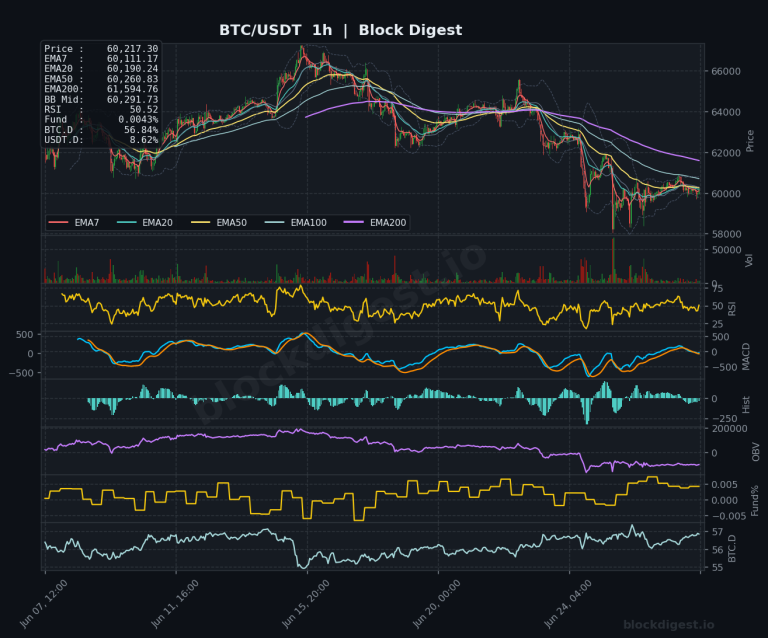
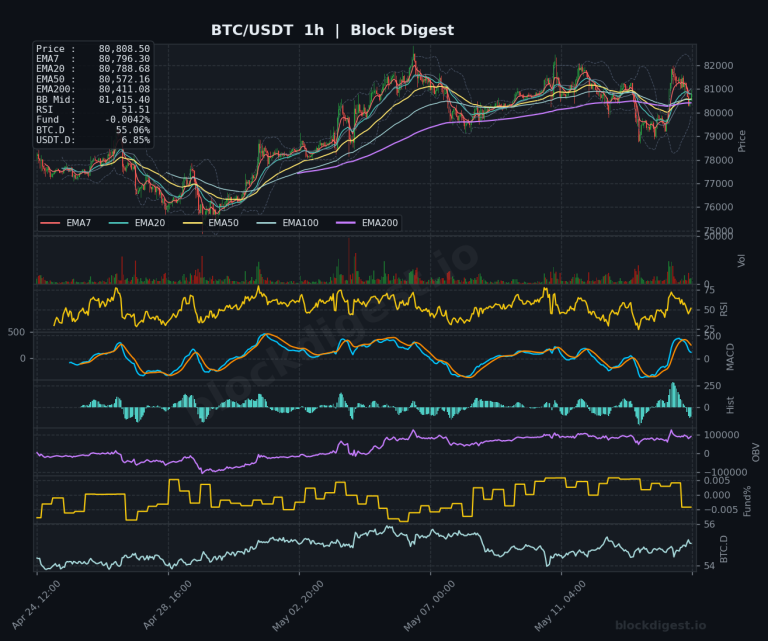
Bitcoin held near 64,810 as of July 19, supported by the reduced probability of imminent rate hikes and sustained institutional inflows. Block Digest’s proprietary BD Pulse indicator registered 57/100, reflecting a bullish tilt, while the BD Extreme Index stood at plus 0.79 sigma—well within normal range and indicating no extreme leverage or positioning imbalances. The long-to-short account ratio stood at 1.36, meaning 57.6% of tracked positions were long against 42.4% short, a healthy bias without excessive crowding.
Funding rates remained modest at 0.0057%, suggesting that leveraged longs were not pricing in aggressive further upside. The relative strength index at 52.18 positioned Bitcoin in neutral territory, neither overbought nor oversold. Bitcoin dominance sat at 55.38%, indicating that alternative assets had gained relative ground during the rally, a typical pattern when risk appetite broadens beyond the flagship asset.
Regulatory Tailwind Ahead
Beyond the inflation data, crypto markets are monitoring the Digital Asset Market CLARITY Act, which is expected to face a Senate vote sometime between July 20 and July 24. This legislation would designate Ethereum and other tokens as digital commodities rather than securities, potentially providing long-awaited regulatory clarity and institutional runway. A successful vote would remove significant uncertainty that has weighed on altcoins throughout 2026.
What This Means for the Market
The crypto market now faces a classic risk-reward dynamic. The inflation surprise and reduced rate-hike probability create a supportive backdrop for risk assets, while Warsh’s hawkish tone and persistent 80% odds of a rate hike by year-end mean that tightening is far from finished. Traders should expect continued volatility as macro data rolls in and Fed speakers continue their testimony cycle. The passage of the CLARITY Act could provide a catalyst for institutional participation, though macro conditions remain the dominant driver for now. Bitcoin’s hold above 64,000 will likely determine whether the current rally extends into early August or reverts to tighter ranges as markets digest the mixed Fed signal.
—
Disclaimer: This content is for informational purposes only and does not constitute financial advice. Cryptocurrency markets are highly volatile and unpredictable. All trading decisions should be made based on your own research and risk tolerance. Block Digest is not responsible for any financial losses incurred as a result of acting on this content.