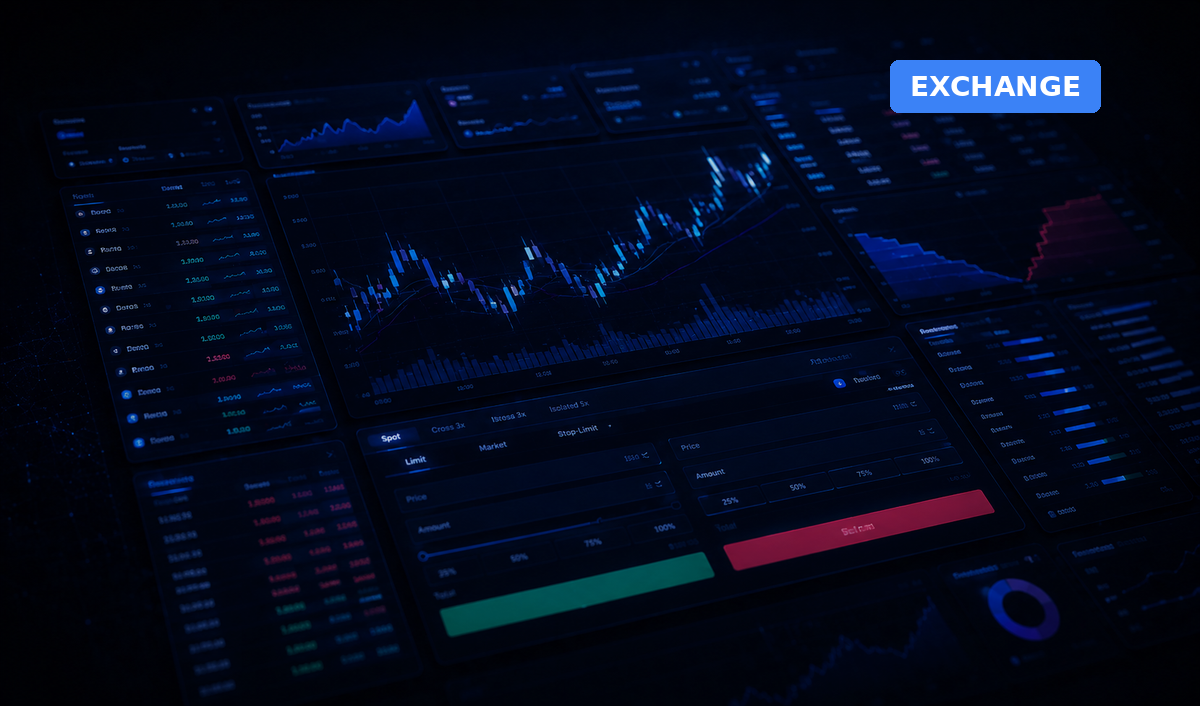
Binance has officially shut down its centralized NFT marketplace as of July 3, 2026, marking the final major crypto exchange exit from non-fungible token trading. The closure comes exactly one month after the exchange announced the move, giving users a tight deadline to withdraw their digital assets or face losing access to them entirely.
Background: A Market in Freefall
The shutdown represents far more than a single platform’s operational decision. It marks the effective end of centralized exchange-based NFT trading as a viable business model, a category that once seemed poised to revolutionize digital ownership but has instead become a graveyard of abandoned infrastructure.
NFT trading volumes have collapsed catastrophically since the 2022 peak. Annual trading volume stood at nearly 24 billion dollars in 2022, but fell to approximately 1.2 billion dollars across 2026 so far. The global NFT market itself is valued at roughly 1.5 billion dollars today, representing a decline exceeding 90 percent from its 2022 zenith. The trajectory worsened in 2025, when total annualized volume across all blockchains reached just 5.5 billion dollars, down from over 50 billion dollars at the previous peak. In the fourth quarter of 2025 alone, volume contracted 28 percent quarter-over-quarter, settling at 1.25 billion dollars.
Binance’s retreat follows a pattern already established by competitors. Coinbase NFT, which launched in May 2022 with a reported waitlist numbering in the millions, shut down in August 2024 after failing to gain traction. Kraken NFT, launched in June 2023, closed in February 2025 as the exchange redirected resources toward other products. Gemini-owned Nifty Gateway, one of the oldest and most established NFT trading platforms, announced its closure in January 2026 after facilitating over 300 million dollars in sales during the 2021 digital art boom. By eliminating its marketplace, Binance becomes the last major centralized exchange to formally exit the NFT business.
Withdrawal Terms and Reimbursement Structure
The shutdown process came with specific conditions designed to minimize user losses, though compliance remained the user’s responsibility. Binance announced the closure on June 3, providing exactly one month for users holding transferable NFTs to move their assets to either Binance Wallet or any other compatible self-custody wallet. Any NFTs remaining on the exchange after the July 3 deadline became inaccessible to their owners.
To offset withdrawal costs, Binance committed to reimbursing 1 USDC to up to 100,000 users withdrawing standard NFTs from the platform. This reimbursement represented the approximate gas fee cost associated with a single NFT withdrawal. Holders of Cristiano Ronaldo-linked CR7 NFTs received extended protection, with reimbursement eligibility lasting until July 19, though users who missed the June 17 cutoff for standard NFTs were required to pay their own gas fees.
Non-transferable NFTs presented a different challenge entirely. These assets, originally coded to prevent withdrawal and transfer, remained stuck on the platform without redemption options. Binance offered a consolation prize to affected users: PDF certificates for those who had completed courses through the Binance Academy platform. While symbolically acknowledging the issue, these certificates carried no financial value.
Strategic Repositioning as Web3 Transition
Binance framed the marketplace closure not as a retreat but as an upgrade. The company described the move as enabling users to access Web3 and decentralized features more easily through Binance Wallet, suggesting a shift toward non-custodial asset management rather than abandoning the space entirely. However, the closure coincides with the exchange’s strategic pivot toward stock trading and tokenized assets, areas where regulatory clarity and market demand have proven substantially stronger than in NFTs.
The company had already been scaling back its NFT commitments before the marketplace shutdown. In April 2024, Binance ended support for Bitcoin Ordinals, a significant segment of the NFT ecosystem. In September 2023, the exchange had removed Polygon network support from its marketplace, restricting user options further. Today’s closure represents the logical conclusion of a strategy shift that began years earlier.
What This Means for the Market
The implications of Binance’s exit extend beyond inconvenience for individual users. The closure of every major centralized exchange NFT marketplace creates a structural void in how retail and institutional participants access NFT trading infrastructure. Users previously reliant on Binance’s interface, custodial comfort, and integrated trading experience must now navigate decentralized alternatives like OpenSea, Blur, and Magic Eden. These platforms require wallet management, seed phrase security, and direct gas fee payments, barriers that proved decisive for less sophisticated users who originally deposited NFTs on Binance specifically to avoid those technical requirements.
The shutdown also signals that centralized platforms have determined NFT trading generates insufficient revenue to justify operational costs. With volumes compressed 90 percent from peak levels and showing no sustained recovery signals, the business case for maintaining dedicated NFT infrastructure has effectively disappeared. Binance’s decision to reallocate resources to higher-demand products reflects a broader market reality: NFTs have transitioned from speculative asset class to niche use case.
For remaining NFT projects and communities, the infrastructure consolidation leaves fewer onboarding options for new participants while pushing users toward decentralized protocols and self-custody arrangements that carry higher friction and technical barriers.
Binance’s marketplace closure marks a watershed moment indicating the NFT sector’s structural contraction from mainstream financial experiment to specialized blockchain application.
Disclaimer: This content is for informational purposes only and does not constitute financial advice. Cryptocurrency markets are highly volatile and unpredictable. All trading decisions should be made based on your own research and risk tolerance. Block Digest is not responsible for any financial losses incurred as a result of acting on this content.
Stay Ahead of the Market
Follow BlockDigest for crypto market intelligence, research and real-time updates.