
Crypto Rallies as Fed Rate-Hike Odds Collapse on Soft Inflation Data
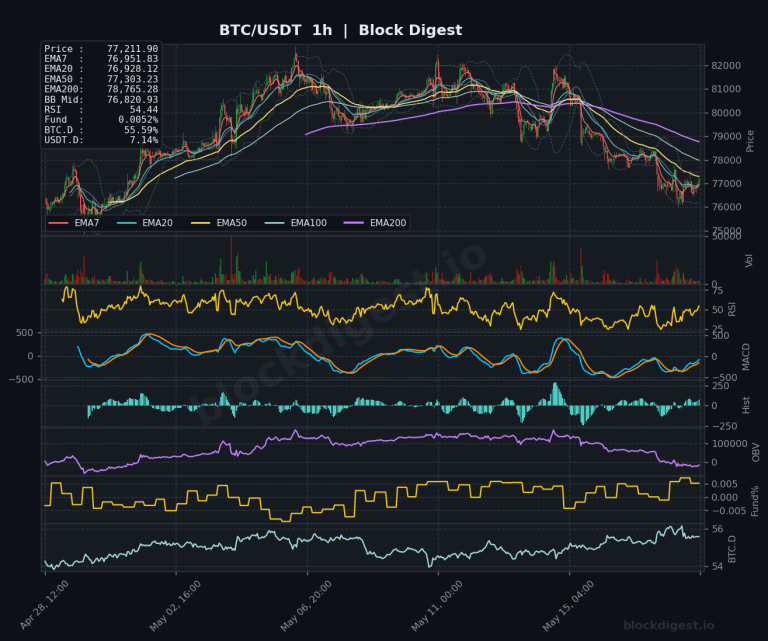
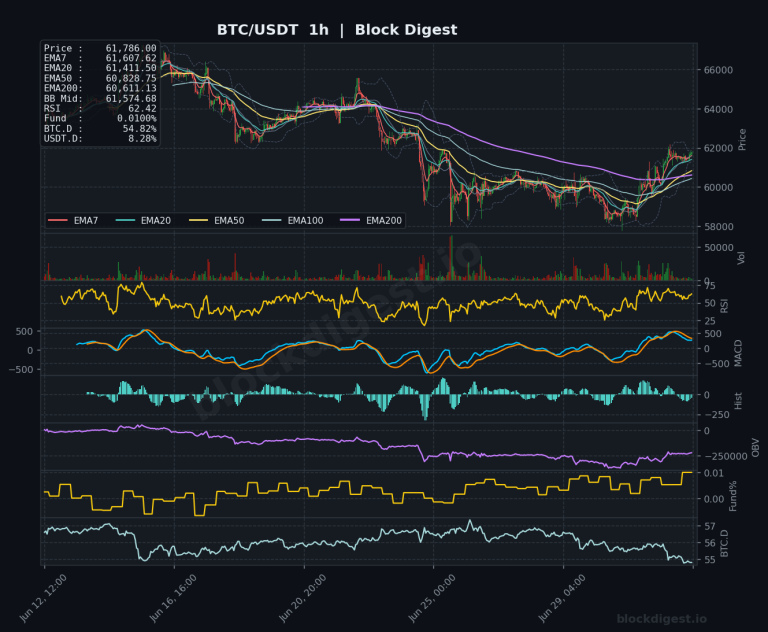
U.S. inflation data released over the past 48 hours has dramatically shifted Federal Reserve rate-hike expectations downward, triggering a sharp crypto market rally that pushed Bitcoin above $64,800 and Ethereum to $1,890. The softer-than-expected Producer Price Index on July 16 followed a cooler-than-forecast Consumer Price Index report on July 14, together signaling that monetary tightening urgency has substantially diminished and leaving markets pricing in only a 4 percent probability of a Fed rate hike at the July meeting.
The Inflation Data That Changed Everything
The June Consumer Price Index arrived on July 14 with headlines that immediately sparked market attention. The headline reading came in at 3.5 percent year-over-year, notably below the 3.8 percent consensus forecast that economists had anticipated. Core inflation, the metric excluding volatile food and energy prices, printed at 2.6 percent year-over-year versus expectations hovering around 2.8 to 2.9 percent. More striking still was the month-over-month performance: headline prices declined 0.4 percent from June, marking the first monthly decrease in the headline measure since 2020, while core prices remained flat at 0.0 percent on a monthly basis.
The broader narrative from the CPI data revealed moderating price momentum across the economy. May’s headline reading had stood at 4.2 percent, making June’s 3.5 percent print a substantial step down, largely powered by declining energy costs that reflected shifting global commodity dynamics. The flat core month-over-month reading suggested that underlying inflation pressure, stripped of energy and food volatility, was losing momentum.
Just hours after the CPI release, the July 15-16 Producer Price Index data arrived with similarly dovish implications. The PPI showed its largest monthly decline since April 2025, a significant development that immediately affected Fed rate-hike probabilities. The probability of a September rate hike fell from 59 percent to 41.5 percent within a single 24-hour window as traders recalibrated their monetary policy expectations.
Federal Reserve Context and Official Statements
The inflation narrative had appeared more hawkish just days earlier. Fed Governor Christopher Waller had warned markets that another hot core inflation reading would compel the Federal Open Market Committee to seriously consider tightening monetary policy in the near term. Waller stated explicitly that hot June data would leave the FOMC with little choice but to evaluate rate increases. He had pegged a 40 percent chance of a July rate hike should the CPI data disappoint to the upside.
However, the actual data proved dovish relative to that framework. Fed Chair Kevin Warsh clarified the central bank’s new approach to forward guidance, announcing that the FOMC will no longer provide traditional forward-looking rate signals. Instead, decisions will flow directly from incoming economic data, a stance that effectively removes the traditional scaffolding of multi-meeting guidance that markets had relied upon for years.
Cryptocurrency Market Surge
The crypto market response was immediate and pronounced. Bitcoin opened Wednesday, July 15, at $64,974.75, up 4.4 percent from Tuesday’s opening, while Ethereum opened at $1,889.97, representing a 6.6 percent jump from the prior day’s open. The price action reflected traders’ interpretation of reduced near-term tightening pressure, a dynamic that typically supports risk assets like cryptocurrencies by expanding liquidity conditions.
Over the full seven-day period through July 16, Bitcoin rallied from $62,194.46 on July 9 to $64,817.44 by July 16, with an intraweek peak of $65,471.67 reached on July 15. Bitcoin gained 2.24 percent in the 1.5 hours immediately following the CPI announcement, adding approximately $28 billion to the cryptocurrency’s total market capitalization during that window alone.
Institutional capital flows supported the retail price action. Spot Bitcoin exchange-traded funds attracted over $180 million in fresh inflows on the day following the CPI release, with the iShares Bitcoin Trust ETF capturing $139 million of that total. The iShares Ethereum Trust ETF gained $58 million, demonstrating institutional appetite across both major cryptocurrency asset classes.
Broader Economic Context
The dovish inflation data emerged against a backdrop of resilient economic activity elsewhere. Fed Chair Warsh characterized the U.S. economy as expanding at a solid pace, with household consumption growing at moderate rates and manufacturing output rising steadily. Business investment represented the economy’s strongest component, driven primarily by data center construction and robust demand for artificial intelligence infrastructure and related software.
The inflation acceleration seen earlier in 2026 had stemmed from three primary sources: tariffs implemented under 2025 trade policy, elevated energy prices reflecting Middle East geopolitical tensions, and demand spillover from aggressive artificial intelligence infrastructure buildout. The June FOMC minutes had reflected a notably hawkish shift, with nine of the 18 Fed officials projecting at least one rate hike before year-end 2026. That hawkish positioning now appears subject to significant revision based on the latest inflation data.
What This Means for the Market
Lower inflation readings reduce the urgency for aggressive monetary tightening, a dynamic that directly supports cryptocurrency valuations and risk appetite more broadly. Crypto assets are particularly sensitive to interest rate expectations because they generate no cash flows and derive value partly from the discount rates applied to future adoption and utility. As rate-hike probabilities decline, the opportunity cost of holding non-yielding assets like Bitcoin and Ethereum decreases, supporting demand.
The shift from hawkish Fed guidance to data-dependent decision-making introduces additional near-term volatility, as markets will parse each subsequent economic data release for hints about the central bank’s trajectory. Bitcoin’s reclamation of the $64,000 level and Ethereum’s move above $1,880 appear sustainable if economic data continues to signal disinflation, though weakness in future data could quickly reverse these gains.
The crypto market’s recovery appears anchored to legitimate macro fundamentals rather than speculative positioning, suggesting the rally carries conviction among institutional participants now deploying capital into spot ETF products.
Disclaimer: This content is for informational purposes only and does not constitute financial advice. Cryptocurrency markets are highly volatile and unpredictable. All trading decisions should be made based on your own research and risk tolerance. Block Digest is not responsible for any financial losses incurred as a result of acting on this content.