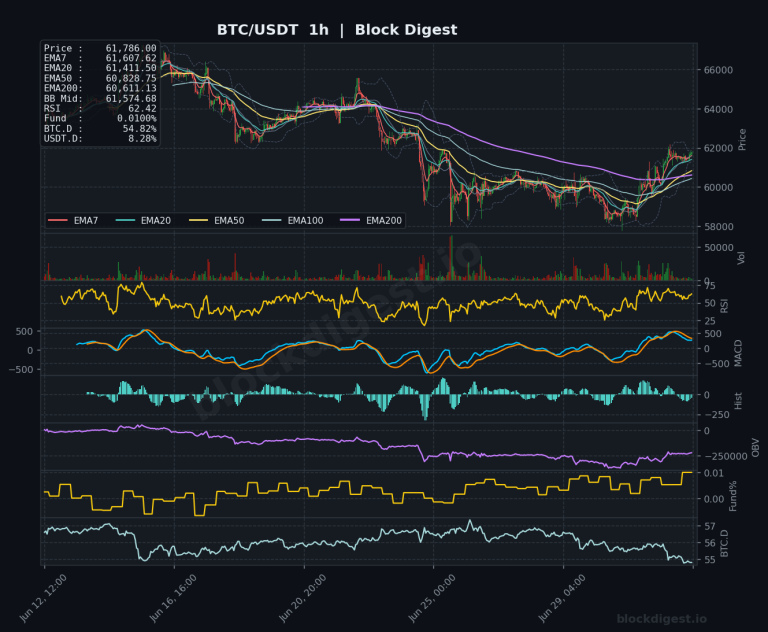

Iran War Scare, Inflation Data Collide as Bitcoin Plunges Below $62,500
The cryptocurrency market is in freefall as geopolitical tensions between the United States and Iran collide with expectations for critical inflation data due at 8:30 a.m. ET today, July 14, 2026. Bitcoin has fallen below $62,500, institutional investors are pulling billions from crypto assets, and the Fear and Greed Index has plummeted to extreme fear levels as traders grapple with competing forces: hope for softer inflation and dread of renewed Middle East conflict.
Escalating Tensions Trigger Market Selloff
On Monday, President Trump announced to Congress that the United States is entering a new war with Iran, triggering a fresh 60-day conflict clock that has immediately rippled through global financial markets. The declaration comes at the worst possible time for cryptocurrency investors, who were already bracing for the June Consumer Price Index report scheduled for release this morning.
The immediate impact on digital assets has been severe. Bitcoin dropped 1.98 percent in the past 24 hours, settling at $62,474.85 with trading volume reaching $37.1 billion. The broader cryptocurrency market capitalization fell to $2.23 trillion, down 1.5 percent as investors rushed toward safe-haven assets and away from risk-on investments like crypto.
The Fear and Greed Index, a key sentiment barometer for the cryptocurrency market, has deteriorated dramatically from 28 (fear) to 22 (extreme fear) in recent hours. This metric reflects unprecedented pessimism among crypto traders and institutions. The index’s collapse signals that market participants view the current environment as genuinely dangerous.
Institutional Capital Fleeing Bitcoin Products
The sell-off extends beyond retail traders. Major institutional Bitcoin ETF products experienced massive outflows on July 13, with a combined exit of 424 million dollars across leading products. BlackRock’s iShares Bitcoin Trust (IBIT) saw 185 million dollars withdrawn, while Fidelity’s Bitcoin Fund (FBTC) experienced a 245 million dollar exodus.
These flows represent one of the largest single-day institutional exits from Bitcoin products in recent months. The timing suggests that institutions are front-running both geopolitical uncertainty and the potential for hawkish inflation data. Bitcoin’s inability to hold above the critical 63,000 dollar psychological level underscores weakening technical support.
Oil Surge Threatens Inflation Narrative
The geopolitical escalation has sent crude oil prices surging. West Texas Intermediate crude has climbed above 80 dollars per barrel, representing a 20 percent gain from July lows and a 3 percent jump in the past 24 hours alone. This oil rally directly threatens the inflation-easing narrative that has supported cryptocurrency recovery since late June.
Higher energy prices propagate through the global economy, increasing costs for food production, transportation, and manufacturing. This dynamic creates a dual headwind for crypto: elevated inflation pressure could force the Federal Reserve to maintain or increase interest rates, directly competing with speculative assets like Bitcoin that thrive in low-rate environments.
The relationship is straightforward but troubling for cryptocurrency advocates. When oil spikes due to geopolitical conflict, inflation accelerates. When inflation accelerates, central banks hold rates higher for longer. When rates remain elevated, capital flows away from Bitcoin and toward safer, higher-yielding alternatives.
CPI Data and Rate Expectations Converge
The June CPI report, due for release at 8:30 a.m. ET today, carries outsized significance given current market conditions. Economists expect headline inflation to decelerate to 3.8 percent year-on-year from 4.2 percent previously, with prices falling 0.1 percent month-on-month. Core inflation is expected to remain steady at 2.9 percent annually and 0.2 percent monthly.
If these estimates prove accurate, the data would normally be considered crypto-friendly, suggesting inflation is cooling and that rate-hike risks are diminishing. However, the Iran escalation has shifted market psychology entirely. Traders are now pricing a 40 percent probability of a Federal Reserve rate hike, according to the CME FedWatch Tool.
The 10-year Treasury yield remains elevated above 4.6 percent, pricing in elevated expectations for future rate decisions. This level is notably higher than the environment that allowed Bitcoin to recover from late-June lows near 58,000 dollars.
What This Means for the Market
Cryptocurrency markets face a genuine inflection point. The recovery narrative of the past two weeks, built on hopes that inflation was cooling and that rate-hike risks were receding, is now under direct assault. The Iran conflict threatens to reverse progress on the inflation front by driving up energy costs globally.
The institutional selling evident in Bitcoin ETF flows suggests that large players are not waiting to see how events unfold. They are repositioning defensively now. Retail traders appear to be following suit, evidenced by the dramatic deterioration in sentiment metrics.
The next few hours will prove critical. If the CPI report comes in softer than expected and provides sufficient dovish reassurance that the Fed can begin cutting rates soon, crypto markets could stabilize. Conversely, if inflation proves stickier than expected or if oil prices accelerate further due to Middle East tensions, expect Bitcoin to test significantly lower levels.
The crypto market now depends on the Federal Reserve proving that geopolitical risk will not force a hawkish pivot despite global instability.
Disclaimer: This content is for informational purposes only and does not constitute financial advice. Cryptocurrency markets are highly volatile and unpredictable. All trading decisions should be made based on your own research and risk tolerance. Block Digest is not responsible for any financial losses incurred as a result of acting on this content.