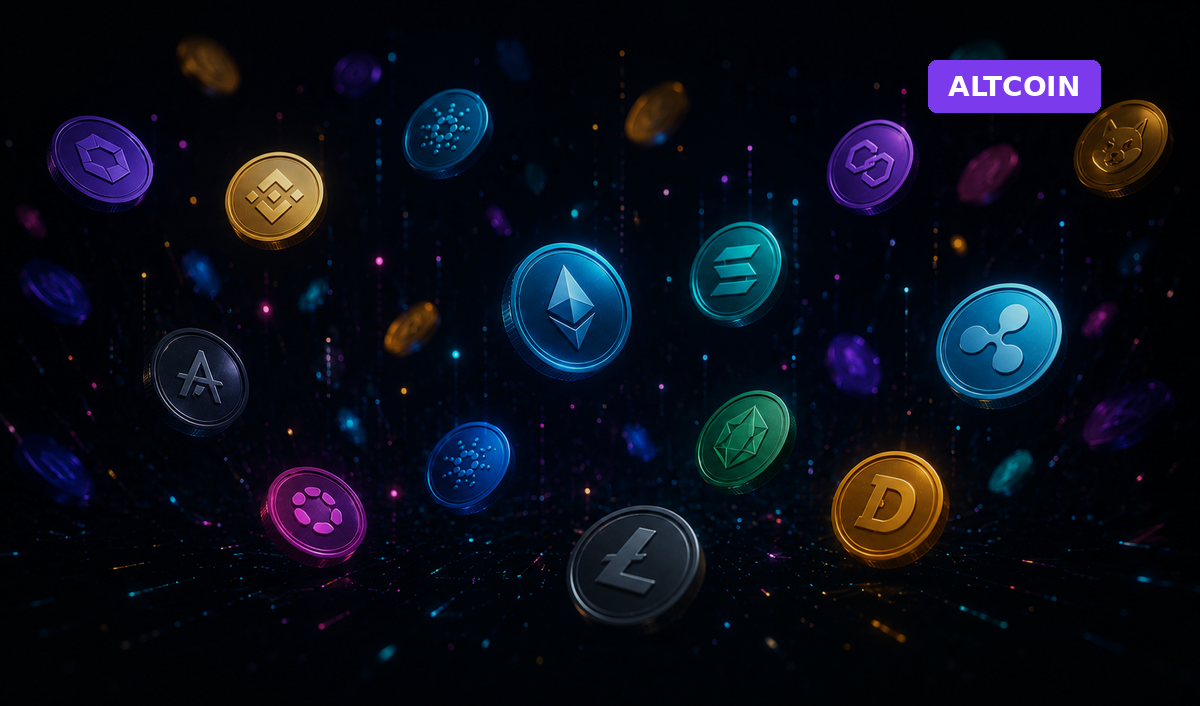
Cardano surged 7.12% to $0.2015 on August 7 following announcement of the first live cross-chain IBC connection with Injective, marking a watershed moment for blockchain interoperability. The price move reflects growing investor appetite for ecosystems solving the fragmentation problem that has long plagued decentralized finance, even as broader market positioning remains cautious ahead of potential regulatory clarity from Washington.
The Cross-Chain Breakthrough
The Cardano-Injective connection represents the first functional inter-blockchain communication (IBC) rail between two previously siloed ecosystems, delivered on testnet and moving toward mainnet deployment. IBC, a standardized protocol for passing messages between different blockchains, has been a Cosmos ecosystem feature for years but has remained inaccessible to most other layer-one networks. Cardano’s integration signals a maturation of cross-chain infrastructure outside traditional Cosmos boundaries and positions the network as a legitimate player in the modular blockchain thesis that has dominated technical discourse since 2024.
The timing of the announcement coincided with heightened institutional interest in blockchain composability. According to JPMorgan’s recent analysis, demand for exchange-traded products tied to newer blockchain assets like Hyperliquid (HYPE) has stalled during July and August as competition from regulated U.S. platforms intensified. Investors have rotated exposure toward more established ecosystems including Solana and XRP, which benefit from deeper liquidity and regulatory recognition. Cardano’s interoperability breakthrough appears designed to counter that narrative by demonstrating active development on infrastructure that could unlock new use cases and cross-chain arbitrage opportunities.
Market Structure and Institutional Positioning
Bitcoin open interest stands at $48.24 billion, up 5.05% over the past 30 days, while Ethereum open interest reached $26.51 billion with a stronger 12.06% monthly gain. These figures suggest institutional participants are gradually adding exposure across major assets, though at a measured pace. Funding rates remain neutral and compressed, with Bitcoin at 0.0019% per eight hours (2.10% annualized) and Ethereum at 0.0012% per eight hours (1.34% annualized), indicating balanced sentiment between long and short positioning.
Block Digest’s proprietary BD Pulse Score stands at 43 out of 100, reflecting a bearish lean in short-term momentum despite the Cardano rally. The long-to-short account ratio of 1.12 shows a modest bias toward longs at 52.9% versus shorts at 47.1%, suggesting that while bullish positioning exists, it lacks the crowded leverage that historically precedes sharp drawdowns. BTC dominance remains elevated at 55.42%, reinforcing Bitcoin’s role as the market’s primary risk asset and barometer of institutional conviction.
Broader Ecosystem Trends
The Cardano-Injective development fits into a larger technological narrative around modular blockchain architecture. Espresso Systems and Astria are currently running shared sequencer networks that enable multiple rollups to share ordering while achieving atomic composability, a design pattern gaining traction across Ethereum’s layer-two ecosystem. Cardano’s entry into cross-chain infrastructure suggests that even proof-of-stake networks built on entirely different consensus mechanisms can interoperate at scale.
This shift toward composability across previously isolated ecosystems could reshape developer incentives and capital allocation throughout decentralized finance. If Cardano can reliably route value to and from Injective, and if that connection extends to additional networks, the network effects could compound. Users would gain single-entry points into multi-chain liquidity pools, reducing friction and enabling new strategies that have been theoretically possible but practically difficult to execute.
Regulatory Headwinds and Legislative Delays
The positive technical narrative is tempered by regulatory uncertainty in the United States. The U.S. Senate will not vote on the Digital Asset Market Clarity Act before its August recess, significantly reducing the probability that comprehensive market-structure legislation becomes law during 2026. The CLARITY Act, which would have clarified jurisdictional boundaries between the Securities and Exchange Commission and the Commodity Futures Trading Commission, had been positioned as a potential catalyst for institutional onboarding and product innovation.
The delay extends an existing period of regulatory ambiguity that has persisted since late 2024. While spot bitcoin and ethereum ETFs have achieved regulatory approval, the absence of clarity on decentralized finance, staking, and cross-chain protocols has created friction for institutional service providers and caused some development teams to migrate operations overseas. Cardano’s announcement, occurring within this regulatory vacuum, carries implicit symbolism: technical progress is accelerating even as political progress stalls.
What This Means for the Market
The Cardano surge reflects legitimate infrastructure development rather than speculative excess, supported by measured institutional positioning that lacks the hallmarks of a crowded long setup. If the Cardano-Injective connection successfully transitions to mainnet and demonstrates reliable cross-chain settlement, it could catalyze a rotation toward altcoins with tangible interoperability improvements. However, regulatory delays in Washington and JPMorgan’s observations on ETF product competition suggest that near-term upside may be limited to ecosystem-specific tokens and assets with direct exposure to cross-chain infrastructure, while broad-based retail interest remains contingent on either regulatory progress or a return to exponential price appreciation in Bitcoin and Ethereum.
Disclaimer: This content is for informational purposes only and does not constitute financial advice. Cryptocurrency markets are highly volatile and unpredictable. All trading decisions should be made based on your own research and risk tolerance. Block Digest is not responsible for any financial losses incurred as a result of acting on this content.
Stay Ahead of the Market
Follow BlockDigest for crypto market intelligence, research and real-time updates.