
Bitcoin Holds $65K on Fed Hopes as ETF Inflows Return Ahead of FOMC
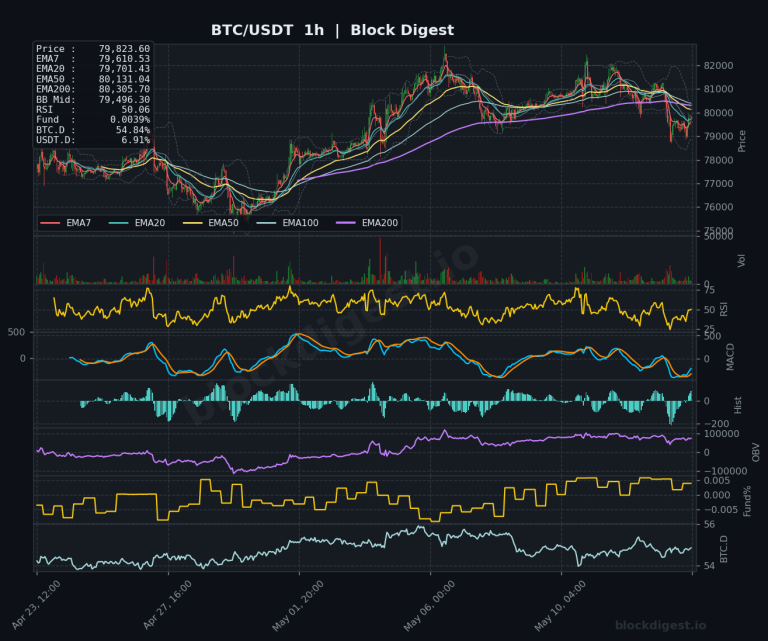
Bitcoin has extended its consolidation phase above the $65,000 level, buoyed by cooler inflation data and accelerating regulatory progress, but the market remains laser-focused on the Federal Reserve’s July 28-29 meeting as the decisive catalyst for the next major move. With the Fed now priced at 94% probability of holding rates steady and spot Bitcoin ETF inflows extending to six consecutive days, crypto markets are pricing in a benign near-term macro backdrop—even as on-chain metrics flash mixed signals about sustainability.
The Consolidation Setup
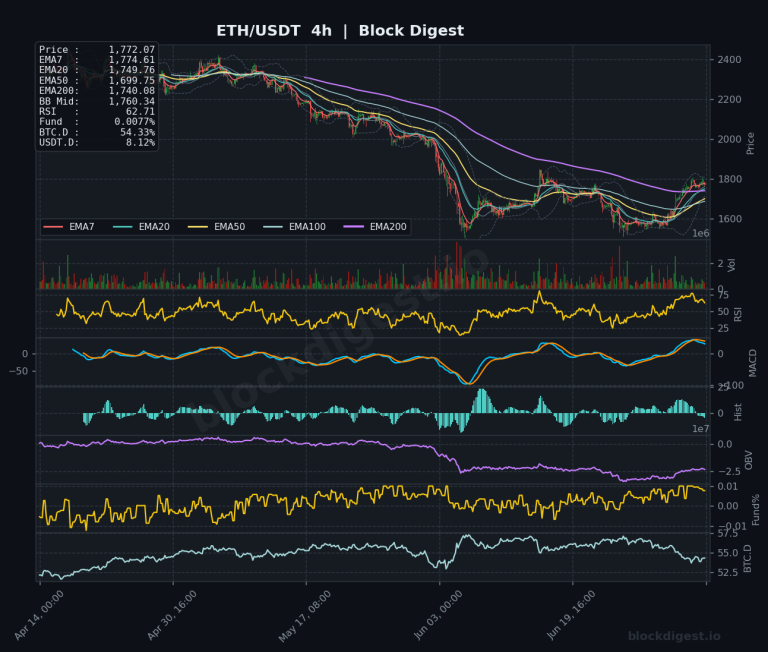
Bitcoin closed Wednesday, July 22 at $65,940, down just 0.56 percent from the open after defending the critical $65,600 support level earlier in the session. Ethereum moved sideways, trading near $1,915 with modest positive momentum, while Bitcoin dominance held steady at 56.6 percent. The price action reflects neither capitulation nor euphoria, but rather a market in pause mode ahead of the FOMC decision.
The move higher from the $62,000 range earlier in the week was catalyzed by the June inflation report released July 14, which showed headline CPI cooling to 3.5 percent year-over-year from 5.2 percent in May—a significant deceleration that initially sent Bitcoin surging to $64,900 and Ethereum jumping 7 percent to $1,884 intraday. Core inflation landed at 2.6 percent, meeting Fed target levels, yet Federal Reserve Chair Kevin Warsh refused to declare victory, telling Congress the Fed maintains “no tolerance for persistently elevated inflation.” That hawkish framing tempered what could have been an even more explosive rally.
Inflows and Regulatory Tailwinds
Institutional capital has resumed flowing into spot Bitcoin exchange-traded funds, with the iShares Bitcoin Trust ETF alone gaining nearly $164 million in assets on July 22. This marks the sixth consecutive day of positive inflows to spot Bitcoin ETFs—a reversal of earlier summer weakness and a signal that large asset allocators are defensively rotating into the space ahead of the rate decision.
Two concurrent regulatory developments are supporting the renewed appetite. The Digital Asset Market Clarity Act, which had stalled over an ethics provision disagreement, has seen that dispute resolved and could now advance through the Senate before the August recess. The bill would establish clearer jurisdictional lines between the SEC and CFTC for digital asset classification, addressing years of regulatory ambiguity. Separately, the SEC issued an interpretation confirming that Proof-of-Work mining and bare digital assets fall outside the definition of securities—a significant legal clarification that removes certain execution risks for miners and crypto-native asset holders.
The CFTC has also facilitated the listing of crypto perpetual futures contracts, returning derivative trading volume to domestic exchanges after years of regulatory pressure that pushed activity offshore. These moves collectively amount to regulatory de-risking rather than transformative legalization, but for an asset class fatigued by policy uncertainty, de-risking carries substantial weight.
The Macro Equation
Bitcoin’s year-long struggle has centered on the Fed’s higher-for-longer interest rate regime. As a non-yielding asset, Bitcoin faces direct opportunity cost when risk-free rates remain elevated. The July 14 inflation data, combined with market pricing that now assigns 94 percent probability to a held rate at the upcoming FOMC meeting, has removed the immediate hike risk that constrained sentiment. The remaining question is whether the Fed signals future cuts or maintains a “higher for longer” stance even without immediate tightening.
Block Digest’s proprietary BD Pulse indicator currently scores at 63 out of 100, reflecting a bullish but cautious technical environment. The BD Extreme Index sits at plus 1.32 standard deviations, suggesting overbought conditions on a relative basis. Retail positioning data shows long accounts at 55.9 percent versus short at 44.1 percent—a 1.26 long-to-short ratio that remains elevated but not extreme. The funding rate holds steady at plus 0.0022 percent, indicating neither aggressive leverage buildup nor capitulation among derivatives traders.
What This Means for the Market
Bitcoin’s hold above $65,000 depends almost entirely on the Fed’s messaging on July 28-29. If the committee signals a data-dependent approach that leaves the door open to future rate cuts, the current consolidation zone could break decisively higher toward $68,000 and beyond. If messaging emphasizes persistence in the higher-rate environment or raises hike risks again, the $65,000 level becomes a resistance rather than support and liquidation could drive prices back toward $62,000.
Ethereum’s correlation to macro rates remains tighter than Bitcoin’s, meaning any Fed-driven volatility will likely hit altcoins first and hardest. The stablecoin regulatory gridlock—evidenced by the GENIUS Act’s missed July 18 deadline—introduces friction into offshore dollar liquidity but has not yet triggered a credit event. Spot ETF inflows suggest institutional investors expect the FOMC outcome to be neutral to mildly positive, but positioning data shows limited aggressive accumulation at current levels.
The consolidation above $65,000 holds only if the rate narrative stabilizes; any surprise on July 28-29 could invalidate this technical foundation in hours.
Disclaimer: This content is for informational purposes only and does not constitute financial advice. Cryptocurrency markets are highly volatile and unpredictable. All trading decisions should be made based on your own research and risk tolerance. Block Digest is not responsible for any financial losses incurred as a result of acting on this content.